
Neurology
Enhance your diagnostic toolkit with objective insight into brain function. Delphi-MD provides neurologists with direct, quantitative information on brain-network function to complement existing assessments, support clinical decision-making, and monitor change over time.

Diagnostic Clarity
Tell overlapping conditions apart using measurable electrophysiological biomarkers.
Disease Progression
Track the trajectory of neurodegenerative conditions quantitatively.
Treatment Efficacy
See how a patient responds to therapy, in real time.
Point-of-Care Speed
Run a full neuro-assessment in your clinic, with no lengthy preparation.
Detects Dysfunction Before it Becomes Visible
Diagnostic uncertainty can delay intervention during the most critical therapeutic windows. Many patients undergo lengthy evaluations across multiple modalities: clinical exams, cognitive testing, and structural imaging, yet subtle functional abnormalities often remain undetected. This can lead to delayed diagnoses, suboptimal treatment planning, and challenges in evaluating disease progression or therapeutic response.
The absence of brain network function data impacts both clinical confidence and patient outcomes.
Delphi-MD™ provides neurologists with direct, network-based brain function data to support decision-making and treatment progression assessment.
.jpeg)
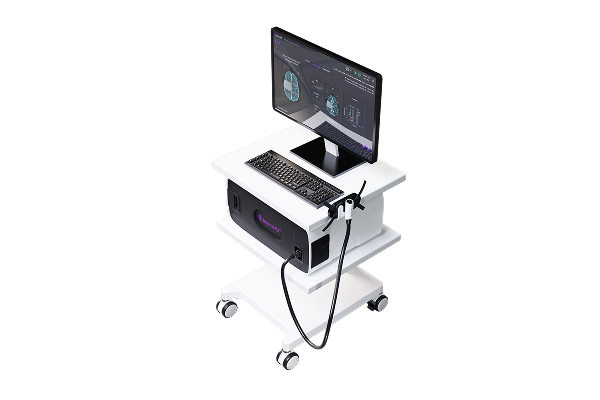
Designed for multidisciplinary neurological workflows
Delphi-MD™ uses controlled stimulation to measure the brain’s response across key cortical networks, providing quantifiable information on cortical excitability and patterns of excitation and inhibition.
Delphi-MD™ can record TMS-evoked potentials (TEPs) from up to six cortical stimulation areas:
- Primary Motor Cortex Left & Right
- Dorsolateral Prefrontal Cortex Left & Right
- Primary Visual Cortex Left & Right
Each stimulation provides a measurable response, helping characterize the functional state of the network being assessed.